
A home should do more than provide shelter. It should support the way you actually live, from your morning routine and work schedule to family time, hobbies, entertaining, relaxation, and everyday responsibilities. While a beautiful home can be enjoyable, the most satisfying spaces are often those that combine appearance with practical functionality.
Creating a home that works for your lifestyle starts with understanding how you use your space now and what you may need in the future. A household with young children may prioritize storage, durable surfaces, and flexible rooms, while someone who works from home may need a quiet office and reliable technology. People who enjoy entertaining may want an open kitchen and comfortable outdoor spaces, while homeowners who value relaxation may focus more heavily on bathrooms, bedrooms, landscaping, and private areas.
The good news is that creating a functional home does not always require a complete remodel. Small improvements, better organization, thoughtful furniture placement, and targeted upgrades can make a significant difference. This article explores practical ways to create a home that fits your routines, preferences, and changing needs.

Start With How You Actually Use Your Home
Before making changes, spend some time observing how your household uses each room. A floor plan may identify a dining room, living room, bedroom, or office, but the way you actually use those spaces may be completely different.
Perhaps the dining room has become a homework station, the kitchen island is where everyone gathers, or the spare bedroom doubles as an office and exercise area. These observations provide valuable information about what is and is not working.
Walk through your home at different times of day and consider where congestion occurs. Are people constantly searching for keys, shoes, chargers, or school supplies? Does one room become crowded because everyone gravitates toward it? Are there spaces that rarely get used?
Once you understand these patterns, you can make changes based on real needs instead of simply following decorating trends. A home becomes more functional when its layout, storage, furniture, and features reflect the people living there.
Create Flexible Spaces
Household needs rarely remain the same forever. Children grow, work arrangements change, hobbies develop, and family members may eventually require different types of spaces. Designing rooms with flexibility in mind can help a home adapt without requiring another major renovation every few years.
A spare bedroom, for example, could function as a guest room while also providing a dedicated workspace. A finished basement could accommodate exercise equipment, entertainment, storage, or a play area. Even a large hallway or unused corner may become useful with the right furniture and organization.
Consider furniture that serves multiple purposes. A storage ottoman can provide seating while concealing blankets or games. A desk can double as a homework station and work-from-home area. Modular shelving can be rearranged as storage needs change.
Flexible spaces are particularly useful when square footage is limited. Rather than assigning every room a single permanent purpose, think about how each area could support several activities without becoming cluttered.
Improve Storage Before Adding More Stuff
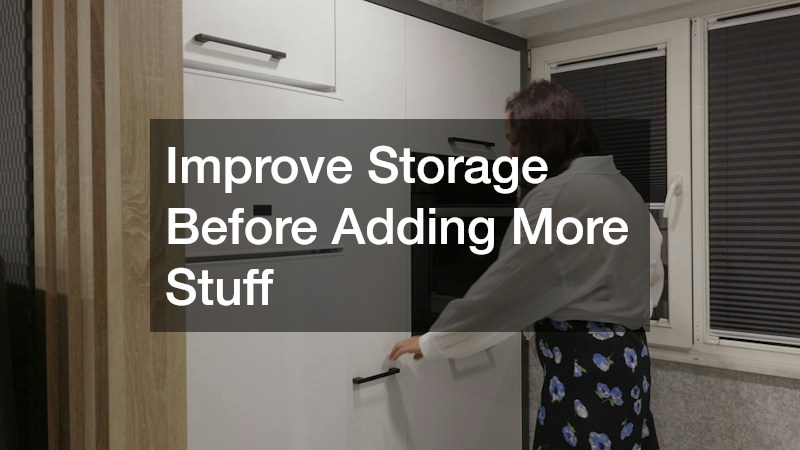
Storage plays a major role in whether a home feels functional. When everyday items do not have designated places, clutter tends to spread across counters, floors, tables, and other surfaces.
Start by identifying what needs to be stored and where it is most convenient to access. Frequently used items should generally remain easy to reach, while seasonal or rarely used belongings can be placed in less accessible storage.
Entryways deserve special attention because they often become collection points for shoes, coats, bags, mail, and miscellaneous items. Hooks, baskets, benches, cabinets, and built-in storage can make these areas easier to manage.
Kitchens also benefit from purposeful storage. Drawer organizers, pull-out shelves, pantry systems, and vertical storage can make frequently used items easier to find. The goal is not simply to maximize storage capacity but to make everyday routines more efficient.
Bedrooms can benefit from similar strategies. Under-bed storage, closet organizers, floating shelves, and multipurpose furniture can help keep belongings organized without adding unnecessary bulky furniture.
Make the Kitchen Work for Your Routine
The kitchen is often one of the most frequently used rooms in a home, so its functionality can have a noticeable effect on everyday life. Before making changes, consider how meals are prepared, where groceries are stored, and how many people typically use the kitchen at the same time.
Cooking habits should influence the layout. Someone who prepares meals frequently may benefit from generous countertop space, accessible storage, and an efficient arrangement of appliances. A household that relies more heavily on quick meals may prioritize easy-to-clean surfaces and convenient appliance storage.
Countertops are another important consideration. If the kitchen is frequently used for food preparation, homework, entertaining, or other activities, sufficient workspace can make the room considerably more practical. A professional countertop service can help homeowners explore options for replacing, repairing, or updating these surfaces.
Lighting should also be considered. Task lighting beneath cabinets can make food preparation easier, while ambient fixtures can create a more comfortable environment for dining and socializing.
Ultimately, the best kitchen is not necessarily the largest one. It is the one that supports the way your household actually cooks, eats, gathers, and moves through the space.
Design Bathrooms Around Comfort and Convenience
Bathrooms should support both practical routines and personal comfort. A bathroom that looks attractive but lacks sufficient storage, lighting, or usable space may become frustrating over time.
Think about who uses each bathroom and what they need. A family bathroom may benefit from durable materials, easy-to-clean surfaces, and generous storage. A primary bathroom may place greater emphasis on relaxation and organization.
Showers are particularly important because they are used frequently. Homeowners updating a bathroom may consider features such as built-in niches, handheld showerheads, seating, improved ventilation, and accessible controls.
A custom shower door can also be selected to complement the bathroom’s layout and overall design. The right door configuration can help make the shower area feel more open while working with the available space.
Lighting is another consideration. Bright task lighting is useful around mirrors, while softer lighting can make the room more comfortable during evening routines. Combining several types of lighting can make a bathroom more versatile.
Make Outdoor Areas an Extension of the Home
Your lifestyle does not stop at the front door. Outdoor areas can provide valuable space for relaxing, dining, entertaining, exercising, gardening, or spending time with family.
Start by determining how you are most likely to use the outdoor space. Someone who enjoys hosting may want a dining area, outdoor kitchen, or comfortable seating. A homeowner who prefers quiet relaxation might prioritize shade, landscaping, and privacy.
Shade can significantly influence how comfortable an outdoor space is during warmer months. Aluminum pergolas can provide a defined outdoor structure while creating a designated area for seating or entertaining.
Pools can also become an important part of a home’s lifestyle. If swimming, recreation, or outdoor gatherings are priorities, working with experienced pool builders can help homeowners think through pool placement, surrounding features, access, safety, and maintenance requirements.
The key is to avoid creating outdoor features simply because they are popular. Every addition should have a clear purpose and contribute to how you expect to use the property.
Plan for Reliable Home Systems
A home’s appearance is important, but its underlying systems have an even greater effect on everyday comfort. Heating, cooling, plumbing, electrical, and other infrastructure should be considered when making larger improvements.
Electrical capacity is particularly relevant as households add computers, appliances, entertainment systems, charging equipment, and other technology. If a home has an outdated electrical system or insufficient capacity, an electrical panel upgrade may be worth discussing with a qualified professional.
Safety and convenience should also influence decisions about the garage. A garage door that operates reliably makes daily departures and arrivals easier while helping protect vehicles and stored belongings. Professional garage door services can address maintenance, repairs, replacement, and other common concerns.
Homeowners should also understand the condition of their septic system if the property is not connected to a municipal sewer system. A local septic company can provide information about inspections, maintenance, pumping schedules, and potential system concerns.
Thinking about these systems before problems occur can make homeownership more predictable and help prevent inconvenient disruptions.
Choose Exterior Improvements That Reduce Maintenance
A lifestyle-friendly home should not only be comfortable; it should also be manageable. Exterior maintenance can consume significant time, especially when a property has a large roof, extensive siding, outdoor structures, or substantial paved areas.
Regular cleaning can help preserve the appearance of exterior surfaces. Power washing may be useful for certain compatible surfaces, including some siding, concrete, decks, and outdoor areas. However, pressure levels and cleaning methods should be appropriate for the material being cleaned.
Roof maintenance is equally important. Damaged shingles, flashing problems, leaks, or aging materials can eventually affect interior spaces. When repairs or replacement become necessary, consulting a qualified roofing company can help homeowners understand the condition of the roof and available options.
Exterior improvements should also be selected with the local climate and the home’s design in mind. Durable materials and appropriate maintenance routines can help reduce the amount of time and money required to keep the property looking its best.
Use Color and Finishes to Reflect Your Personality
Functionality does not mean sacrificing personality. Your home should also feel comfortable and reflect your preferences.
Color is one of the easiest ways to change the atmosphere of a room. Some homeowners prefer neutral palettes, while others enjoy bold colors, patterns, or seasonal changes. The important consideration is how the colors interact with natural light, furniture, flooring, and adjacent rooms.
When larger areas need a refresh, interior house painting services can help create a more polished and consistent finish. A new color can make a room feel brighter, more defined, or more cohesive without requiring major structural changes.
Finishes should also be selected with everyday life in mind. If a household is busy, highly delicate materials may require more maintenance than they are worth. Durable flooring, washable paint, stain-resistant fabrics, and easy-to-clean surfaces may provide a better balance between appearance and practicality.
Consider How Your Needs May Change
A truly functional home should account for the future as well as the present. Think about how your household may change over the next several years.
Growing children may need more privacy and study space. Older family members may eventually benefit from improved accessibility. Remote or hybrid work may become a more permanent part of your routine. Hobbies may require dedicated storage or workspace.
Future planning does not mean predicting everything perfectly. Instead, it means making flexible choices wherever practical.
For example, keeping a room adaptable can make it easier to change its purpose later. Installing additional electrical outlets during a renovation may support future technology. Choosing durable finishes can reduce the need for frequent replacements.
Small amounts of foresight can prevent a home from becoming outdated as quickly as household needs evolve.
Focus on Comfort and Everyday Enjoyment
A home should make daily life easier rather than create a constant list of maintenance tasks and frustrations. Once major functional concerns have been addressed, think about the details that make the space enjoyable.
Comfort may come from better lighting, a cozy reading area, improved bedroom organization, a welcoming entryway, or an outdoor space where you can unwind. Even small changes can make a noticeable difference when they address something you encounter every day.
Pay attention to the spaces where you naturally spend the most time. If the family gathers in the living room every evening, prioritize comfortable seating and accessible storage there. If mornings tend to be hectic, focus on improving the bedroom, bathroom, and entryway routines.
The most successful home improvements are often those that solve recurring problems. Instead of asking only what would make the home look better, ask what would make everyday life easier.
Creating a home that works for your lifestyle starts with understanding how you live and then designing your surroundings around those realities. Functional storage, flexible rooms, comfortable outdoor areas, dependable home systems, practical materials, and thoughtful design can all contribute to a space that feels both useful and personal.
The goal is not to create a perfect home according to someone else’s standards. It is to create an environment that supports your routines, priorities, comfort, and future needs. By making intentional improvements and focusing on the ways your household actually uses its space, you can build a home that remains practical and enjoyable for years to come.